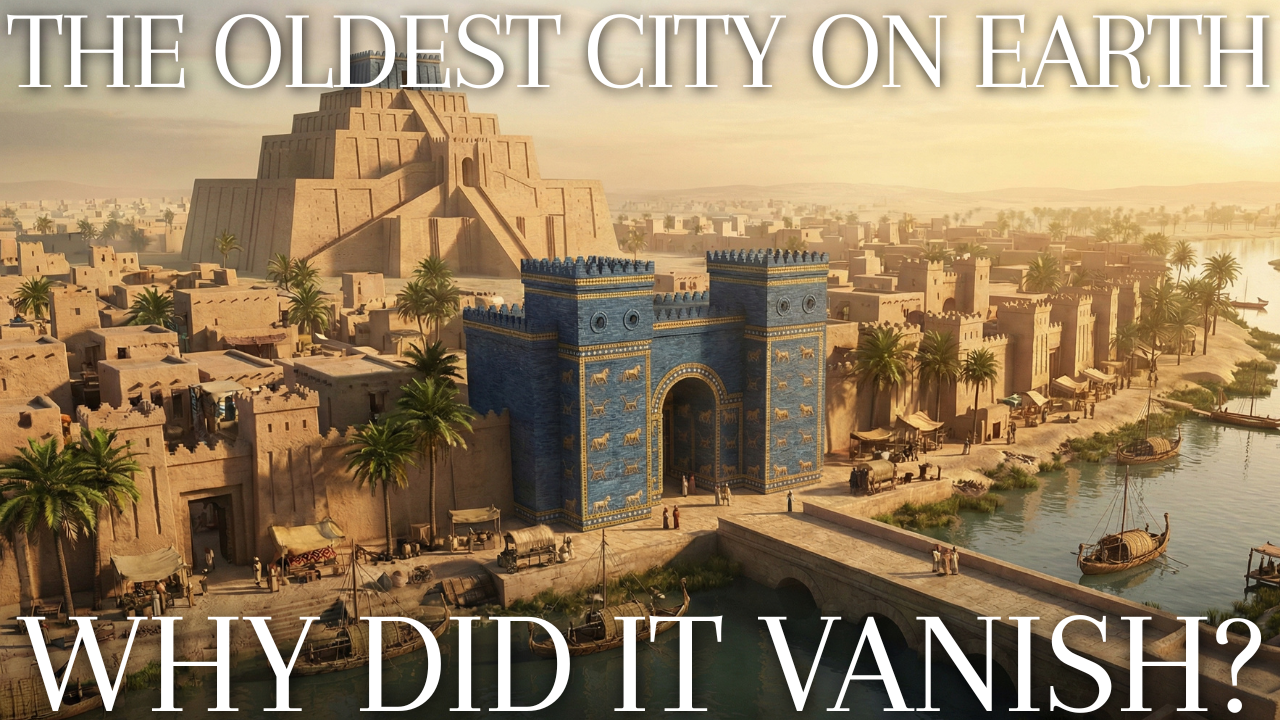
When modern readers encounter the history of ancient Mesopotamia, few names evoke as much grandeur or confusion as Babylon.
Most people recognize the city from biblical narratives, classical accounts of legendary wonders, or textbook timelines charting the rise of early urban civilizations.
Yet the imperial state that reached its political and cultural height in the sixth century BC is usually catalogued under a specialized academic title: the Neo-Babylonian Empire.
Understanding what that label actually represents requires looking past modern assumptions to examine how the Babylonians organized their world, what they called themselves, and how their final empire connected to the millennia of civilization that preceded it.

What “Neo” Actually Means, and Why the Label Matters
No one living in Babylon in 570 BC would have understood the phrase “Neo-Babylonian Empire.” The prefix is a modern convenience, attached by nineteenth-century European scholars who needed a way to distinguish the Babylon of Nebuchadnezzar from the Babylon of Hammurabi twelve centuries earlier. It belongs to the same family of academic labels as “Neolithic,” “Neoplatonism,” and “Neo-Assyrian” — Greek neos, new, bolted onto an older name to mark a later phase of the same thing.
That is the short answer, and it is correct as far as it goes. The longer answer is more useful, because the choice of label encodes a historical judgement that is worth unpacking: the scholars who coined it were saying that what happened in Babylon after 626 BC was a genuine revival of something that had lapsed, not merely the next chapter of an unbroken story.
The Babylonians did not call themselves Babylonian
The inhabitants of the empire referred to their country as Māt Akkadî, the land of Akkad, an archaic term reaching back to Sargon’s empire in the third millennium. Babylon itself was Bābili or Bāb-ilim, the gate of the god, and its king styled himself šar Bābili, king of Babylon, and often also šar mātāti, king of the lands. There was no ethnic self-designation corresponding to “the Babylonians” in the way modern nationalism produces such terms.
People identified themselves by city — a man of Uruk, a man of Sippar, a man of Borsippa — and by family, often by a distant ancestor whose name had become a clan label. A tablet might identify a witness as “Nabû-aḫḫē-iddin, son of Šulâ, descendant of Egibi,” naming an ancestor perhaps two centuries dead. That is a society organised around city and lineage, not nation.
So when we say “the Neo-Babylonian Empire,” we are applying two foreign concepts at once: the periodising prefix, and the notion of an empire as a bounded political object with a name. Neither would have registered. What a Babylonian scribe would have recognised is a run of kings, each dated by regnal year, ruling from Babylon over Akkad and over whatever else the gods had granted.
Why “new” and not “later”
The prefix implies rebirth, and here the Babylonians would actually have agreed, because the claim of restoration was central to how these kings advertised themselves. Every substantial royal inscription from the period presents the king as a restorer: of ruined temples, of neglected rites, of ancient foundations uncovered and rebuilt on their original lines. Nabonidus, the last king, made an entire programme of this, digging for foundation deposits of earlier rulers and dating them, an activity that has earned him the frequently repeated description of the first archaeologist.
The claim had substance behind it. Babylon had spent most of the preceding century as a subordinate territory of the Assyrian Empire, and in 689 BC the Assyrian king Sennacherib had sacked the city, diverted watercourses through its ruins, and carried off the statue of Marduk. The rites had genuinely lapsed; the temples had genuinely been in ruins. A king who restored them was not inventing a grievance.
There is also a stylistic argument. Neo-Babylonian art and script deliberately reach backwards, reviving iconography and letter forms from the third and early second millennia. Scribes wrote in an archaising Babylonian that nobody spoke, using sign forms consciously modelled on much older documents. Sculptors produced boundary stones in a style deliberately recalling Kassite-era originals. This was antiquarianism as state policy, and the modern prefix “Neo-” captures it more precisely than “Late” would.
What the label brackets
The term defines a period: 626 to 539 BC, from Nabopolassar’s coronation in Babylon to the entry of Cyrus the Great’s forces into the city. Eighty-seven years, six kings, one of whom reigned for forty-three of them. As periodisations go it is unusually clean, because both endpoints are datable to the month from Babylonian records and cross-checked against astronomical observations recorded in the same archives.
That precision is worth pausing on. Ancient chronology is usually approximate, with dates given as ranges and scholars arguing over decades. Neo-Babylonian chronology is not like that. The Babylonians recorded lunar eclipses and planetary positions alongside regnal years, and because those events can be recomputed astronomically, the entire dynastic sequence is anchored to absolute dates with a confidence unavailable for most of the ancient world.
So when a source says Nabopolassar took the throne on 23 November 626 BC, or that Nebuchadnezzar II captured Jerusalem on the second day of the month Addar, corresponding to 15 or 16 March 597 BC, these are not scholarly guesses dressed up as precision. They are conversions of dated cuneiform records using astronomical anchors. Very little ancient history is this firmly fixed.
The other “Neo” in the room
Anyone reading about this period will immediately encounter a second modern label: the Neo-Assyrian Empire, conventionally dated from the tenth century to 609 BC. The two terms sit next to each other constantly, and the overlap is not accidental. Assyria’s collapse is what made Babylon’s empire possible, and the two states shared a language, a script, a pantheon with local variations, and a great deal of administrative practice.
The distinction that matters is one of self-understanding. Assyria’s kings presented themselves as conquerors extending the borders of the god Ashur by force, and their inscriptions read like military logs, year after year of campaigns, tribute, and reprisal. Babylon’s kings presented themselves as pious builders, and their inscriptions read like construction reports. Both fought constant wars. Only one thought war was the thing worth writing down.
That difference in self-presentation is one reason the Neo-Babylonian Empire feels less militarily impressive than it was. We simply do not have the campaign record, because the Babylonian royal genre did not produce one. What we have instead is the chronicle series, a terse year-by-year list compiled by scholars rather than by the palace, and it survives only in fragments for this period.
Does the label do any harm?
It does, in one respect. Calling the period “Neo-Babylonian” encourages the assumption that the empire’s distinguishing feature was its Babylonian-ness — its cultural continuity with a deep past. That was true of its rhetoric. It was much less true of its population, which by the seventh century was heavily Aramean and Chaldean in origin, spoke Aramaic in the street, and in many cases had arrived in Babylonia within living memory as tribal migrants or as deportees.
The empire’s rulers were almost certainly not descended from the old Babylonian urban elite. Nabopolassar’s origins are obscure enough that he described himself in one inscription as a “son of a nobody,” a formula meaning he had no royal ancestry to claim.
So the empire was a Babylonian revival staged by people whose claim to Babylonian tradition was a political achievement rather than an inheritance. That is not a criticism; it is a description of how most successful states work. But it does mean the “Neo-” carries a slight distortion: it suggests continuity where the deeper truth is skilful appropriation.
How the term is used in practice
In current scholarship you will encounter several overlapping terms for roughly the same thing, and it helps to know which is which before reading further.
| Term | What it covers | Who uses it |
|---|---|---|
| Neo-Babylonian Empire | The political state, 626–539 BC | Historians and archaeologists, standard usage |
| Neo-Babylonian period | The same span, treated as a cultural and archaeological phase | Art historians, excavation reports |
| Chaldean Empire / Chaldean dynasty | The same state, named for the presumed tribal origin of its kings | Older scholarship, biblical studies, popular writing |
| Late Babylonian | A linguistic and textual phase running past 539 BC into the Persian and Hellenistic centuries | Assyriologists describing language and archives |
| Second Babylonian Empire | The same state, numbered against Hammurabi’s | Occasional, mostly older or general works |
The distinction between “Neo-Babylonian” and “Late Babylonian” trips up readers regularly. The first is political and stops in 539 BC. The second is a description of the Akkadian language and of archival practice, and it continues for centuries afterwards, because the cuneiform scribal tradition did not stop when the Persians arrived. A Late Babylonian tablet can easily date from 400 BC, long after the empire ended.
A working definition
Putting the pieces together produces something usable. The Neo-Babylonian Empire was the independent Mesopotamian state ruled from the city of Babylon between 626 and 539 BC, founded by Nabopolassar in revolt against Assyrian rule, expanded by his son Nebuchadnezzar II into the dominant power of the Near East from the Persian Gulf to the borders of Egypt, and extinguished by the Persian conquest under Cyrus the Great.
Its defining characteristics were a deliberately archaising royal ideology centred on the god Marduk, an extraordinary investment in monumental construction in its capital, an economy documented in more surviving legal and administrative detail than any other ancient state before the Roman Empire, and a scientific tradition in astronomy and mathematics whose results outlived the political structure by two thousand years.
That definition has three components — the political, the cultural, and the intellectual — and they came apart at different speeds. The political entity ended abruptly in October 539 BC. The cultural and religious institutions ran on for centuries under Persian, Macedonian, and Parthian rule. The intellectual tradition was still producing new astronomical results in the first century BC, five hundred years after the last Babylonian king.
Holding those three timescales apart is the single most useful habit a reader can bring to this subject. The empire fell fast. Babylon did not. And the mathematics did not fall at all — it migrated, first into Greek astronomy and then into the whole subsequent history of the exact sciences, carrying with it a sexagesimal number system that survives every time anyone reads a clock.
Why the naming question is not pedantry
Labels decide what gets compared with what. Because the standard term brackets 626 to 539 BC as a single unit, the empire is habitually set beside the Neo-Assyrian and Achaemenid Persian empires, and the comparison flatters none of them equally: Babylon held its territory for under a century, where Assyria held parts of the same territory for three and Persia would hold more of it for two. Judged on duration alone, the Neo-Babylonian Empire looks like a brief interruption between two larger systems.
Judged on other measures the picture inverts. No Assyrian or Persian capital was rebuilt on the scale of Nebuchadnezzar’s Babylon. No other Near Eastern state of the period left an archival record of comparable density. And the single decision for which this empire is best remembered outside specialist circles — the deportation of the Judaean elite — produced consequences that outran every territorial achievement of its neighbours.
There is a further practical reason to be careful with terminology, which anyone searching for sources will discover quickly. A library catalogue, a museum label, and a biblical commentary may describe the same object using three different names for the same state. A glazed brick in Berlin is catalogued as Neo-Babylonian. A commentary on the book of Daniel will call the same kingdom Chaldean. A grammar of the language of the tablets found beside that brick will call it Late Babylonian, and will include material from two centuries after the empire ended.
Knowing that these are largely the same subject under different disciplinary conventions saves a great deal of confusion, and it explains why general reference works sometimes appear to contradict one another about dates. When a source gives the Chaldean Empire as running from 626 to 539 BC and another gives the Late Babylonian period as extending to the first century BC, both are correct; they are counting different things.
The next question is the one that trips up almost everyone approaching the subject for the first time: if this was the new Babylonian empire, what exactly was the old one, and how much did the two have in common beyond a name and a river?
Three Babylons: The Old Kingdom, the Kassite Centuries, and the Empire
Babylon was a city for roughly two thousand years before Nebuchadnezzar II laid a single glazed brick. For most of that span it was not particularly important. It appears in the record around the twenty-third century BC as a minor settlement, is absent from the great third-millennium archives that document Ur and Lagash in such detail, and rises to prominence only when a line of Amorite chieftains made it their seat early in the second millennium.
Understanding what separates that first Babylonian kingdom from the empire of the sixth century requires holding three distinct eras apart, and the gap between them is larger than most comparisons admit. The distance from Hammurabi to Nebuchadnezzar is greater than the distance from the fall of Rome to the present day.
The Old Babylonian kingdom
The First Dynasty of Babylon is conventionally dated to about 1894 to 1595 BC. Its rulers bore Amorite names and descended from West Semitic pastoralists who had moved into Mesopotamia during the instability following the collapse of the Third Dynasty of Ur. For its first century the dynasty controlled a modest stretch of the Euphrates and competed with far stronger neighbours at Larsa, Eshnunna, Mari, and Elam.
Hammurabi, the sixth king, reigned from about 1792 to 1750 BC and changed that. Through a combination of patient diplomacy and a concentrated burst of campaigning in the last fifteen years of his reign, he defeated Larsa, destroyed Mari, and brought the whole of southern Mesopotamia under a single administration for the first time in two centuries. The kingdom he assembled is what the phrase “the Babylonian Empire” usually means in general usage.
He is remembered for the law collection inscribed on a diorite stele now in the Louvre, a text of roughly 282 provisions framed by a prologue and epilogue in which the king presents himself as the shepherd appointed by the gods to establish justice in the land. Whether the collection functioned as enforceable statute or as a monument to royal virtue is still argued; no surviving court record cites it as authority. What is beyond argument is its influence on how later Mesopotamians, and eventually the whole world, imagined the relationship between kingship and written law.
The kingdom did not outlast its founder by much. Hammurabi’s son Samsu-iluna faced revolts across the south within a decade, lost control of Sumer entirely, and saw the great southern cities depopulate. By the time the Hittite king Mursili I raided down the Euphrates and sacked Babylon in 1595 BC, the dynasty ruled little more than its home territory. The Hittites withdrew almost immediately, having come for plunder rather than conquest, and left a vacuum.
The Kassite interval
Into that vacuum came the Kassites, a people whose origins remain genuinely obscure — their language is an isolate, unrelated to Sumerian, Akkadian, or any other attested family, and they left no literature of their own. They ruled Babylonia for roughly four hundred years, longer than any other dynasty in its history, and they did so by adopting almost everything about the culture they had taken over.
Kassite kings took Babylonian throne names, worshipped Babylonian gods, patronised Babylonian scribes, and wrote in Akkadian. They renamed the country Karanduniash, a Kassite term, but they governed it as Babylonians. The period was one of unusual stability and considerable intellectual productivity: it is to Kassite-era scribes that we owe the standardisation of much of the literature that later Babylonians treated as canonical, including the version of the Epic of Gilgamesh that has come down to us.
This is also the period in which Babylonia became a recognised great power in international terms. The Amarna letters, the diplomatic archive of the Egyptian court in the fourteenth century BC, include correspondence between Kassite kings of Babylon and Egyptian pharaohs conducted as between equals, haggling over gold shipments and marriage alliances in a shared diplomatic Akkadian. The Kassites were not a dark age. They were the period in which Babylonian culture became the prestige culture of the whole Near East.
Kassite rule ended around 1155 BC under Elamite pressure, and the following four centuries were genuinely difficult. Babylonia fragmented among short-lived dynasties, Aramean and Chaldean tribal groups moved into the countryside in large numbers, and the Assyrian state to the north grew steadily more powerful and more willing to intervene. By the eighth century, Babylon had become a prize contested between Assyrian kings and tribal chieftains, and increasingly a subject of the former.
What actually carried across the gap
When Nabopolassar took the throne in 626 BC, he was separated from Hammurabi by nearly twelve hundred years — and from the Kassites by five hundred. Almost nothing institutional survived that distance intact. The Old Babylonian administrative system, its land tenure arrangements, its army, and its dialect were all long gone. Even the physical city had been destroyed and rebuilt more than once, most recently and most thoroughly by Sennacherib in 689 BC.
What did survive was a body of text and a set of claims. Scribes still copied Old Babylonian literary works; the language of scholarship remained a deliberately archaic Babylonian that no one spoke; temple rituals preserved prayers in Sumerian, a language dead for well over a thousand years. Above all, the idea of Babylon as the seat of legitimate kingship over the land of Akkad survived, because generations of scribes kept writing it down.
The Neo-Babylonian kings drew on that inheritance deliberately and selectively. They revived the kudurru, the carved boundary stone characteristic of the Kassite period, as a monument form. They wrote inscriptions in a self-consciously old-fashioned sign repertoire. Nabonidus excavated foundation deposits to identify earlier builders by name and restored temples on what he believed were their original plans. The relationship was antiquarian rather than continuous — closer to a Renaissance than to an unbroken tradition.
Setting the two side by side
The differences between the Old Babylonian kingdom and the Neo-Babylonian Empire are structural, not merely chronological.
| Old Babylonian kingdom | Neo-Babylonian Empire | |
|---|---|---|
| Dates | c. 1894–1595 BC | 626–539 BC |
| Ruling stock | Amorite (West Semitic) | Uncertain; probably Chaldean or southern Babylonian |
| Extent at peak | Southern and central Mesopotamia | Gulf to the Egyptian frontier, including Syria and the Levant |
| Spoken language | Old Babylonian Akkadian; Amorite | Aramaic in daily life; Akkadian as written register |
| Signature monument | The law stele of Hammurabi | The Ishtar Gate and Processional Way |
| Writing material | Clay tablets, stone stelae | Clay tablets, stone stelae, glazed brick, and increasingly Aramaic on perishable media |
| Ended by | Hittite raid and internal collapse | Persian conquest |
The territorial difference is the most striking. Hammurabi’s kingdom was a Mesopotamian state that dominated Mesopotamia. Nebuchadnezzar’s empire was a Mesopotamian state that dominated most of the Fertile Crescent, drew tribute from the Mediterranean coast, and fought Egypt on Egypt’s own border. They are simply not the same order of political object, and calling both “the Babylonian Empire” obscures a difference of scale by a factor of several.
The language difference nobody expects
A reader who imagines both Babylons as Akkadian-speaking societies will misread the later one badly. In Hammurabi’s day, Akkadian was the living speech of the population, written in cuneiform and used for everything from love poetry to sheep receipts. By the sixth century BC, Akkadian survived as a written and ceremonial register while ordinary people in Babylonian cities spoke Aramaic.
This had practical consequences that show up in the tablets themselves. Neo-Babylonian scribes made spelling errors that reveal Aramaic interference — confusions between sounds that Akkadian distinguished but Aramaic did not, and constructions that follow Aramaic rather than Akkadian syntax. Legal documents sometimes carry short Aramaic notes scratched on the edge of the clay, a summary for someone who could not read the cuneiform body of the text.
The empire therefore ran two writing systems in parallel: cuneiform on clay for the archival tradition, and alphabetic Aramaic on leather and papyrus for much of the practical business of government. Almost none of the second category survives, because the material rotted. The imbalance in what we have recovered is not an imbalance in what existed.
Why the confusion persists
General references contribute to the muddle by treating “Babylonia” as a continuous civilisation from Hammurabi to Cyrus, which it was in a cultural sense and was not in a political one. The continuity is real at the level of gods, scripts, and scholarly texts. It is illusory at the level of states, dynasties, and populations, all of which changed several times over.
Three specific misreadings follow from the confusion, and they are worth naming so they can be avoided. The first is attributing Hammurabi’s law code to Nebuchadnezzar’s empire, or imagining that Neo-Babylonian courts applied it. They did not; Neo-Babylonian legal practice worked from contract, precedent, and royal decree, and the stele had been carried off to Susa as Elamite loot centuries earlier, which is where it was found in 1901.
The second is imagining the Hanging Gardens as an Old Babylonian monument, which places a structure of contested existence in the wrong millennium on top of everything else. The third, and the most common, is treating “the Babylonian captivity” of the Judaeans as an event of ancient Mesopotamian antiquity in a vague, undated sense, when it belongs precisely and datably to the 590s and 580s BC and is documented in a chronicle that can be read against the biblical account line by line.
The one institution that did survive
There is an exception to the general rule that nothing institutional crossed the gap, and it is an important one: the temple. Esagila in Babylon, Ebabbar in Sippar, Eanna in Uruk, and Ezida in Borsippa were functioning corporations with land, herds, workshops, dependent labour, and their own administrative hierarchies, and they persisted through dynastic changes that destroyed every secular structure around them.
A temple could survive a conquest because it was not primarily a political body. Its estates kept producing, its prebendary offices kept being inherited, its rituals kept being performed, and incoming rulers had every incentive to leave the arrangement alone and take a share. When Sennacherib broke that rule at Babylon in 689 BC, the reaction across Babylonian society was severe enough that his successor reversed the policy within a decade.
This institutional durability explains a great deal about how the Neo-Babylonian state worked. A king who wanted to mobilise labour, land, or silver did not build a bureaucracy from scratch; he negotiated with, taxed, and increasingly inserted royal appointees into organisations that had been running for a thousand years. The empire’s administrative capacity was in large part borrowed capacity, which is why it could expand so quickly and why its collapse left the temples still standing.
A single river, three states
What ties the three Babylons together, beyond the name, is geography. All three occupied the alluvial plain between the Tigris and Euphrates, a landscape with almost no stone, no timber worth the name, and no metal ores, but with deep fertile silt and a river system that could be turned into irrigation canals. Every Babylonian state was therefore built of mud brick, dependent on canal maintenance, rich in grain and dates, and obliged to import every hard material it used.
That constraint shaped everything. It explains why Babylonian monumental architecture is brick rather than stone, why the empire’s wealth was agricultural and commercial rather than extractive, why control of trade routes toward Anatolia and the Levant mattered so much, and why the political history of the region is a history of canal systems as much as of kings. The three Babylons were different states solving the same problem with the same materials.
It also explains the vulnerability that ended two of them. A society whose fields depend on canals is a society whose fields can be ruined by anyone who breaches them, and whose cities can be starved by an enemy holding the upstream sections. The Neo-Babylonian Empire would eventually fall to an army that took Opis, on the Tigris, before it ever reached Babylon.
Before that story can be told, one more label needs examining. If the empire’s rulers were not the heirs of Hammurabi’s Amorites or the Kassites, who were they? The answer that most older books give is a single word, and it is a word that raises more questions than it settles.
The Legacy of Babylon and the Full Story of the Empire
The history of ancient Mesopotamia demonstrates that imperial power was never a permanent condition, but a continuous effort to organize resources, legitimacy, and collective memory along vulnerable river networks.
By looking at the distinct epochs of Babylon, we see that the final imperial century was neither an isolated phenomenon nor a simple carbon copy of the Bronze Age past.
Instead, it stood as a deliberate attempt to resurrect ancient traditions while navigating the complex realities of a rapidly changing Near Eastern world.
This article presents an excerpt from a comprehensive historical study examining the rise, administrative machinery, and collapse of the Neo-Babylonian Empire.
The full version explores the monumental urban design of Babylon under Nebuchadnezzar II, the daily operation of the temple-and-silver economy, and the dramatic political collapse that culminated in the Persian conquest of 539 BC.
Readers interested in exploring the complete archival evidence, structural analyses, and primary cuneiform records will find the entire narrative detailed across the subsequent chapters of the full version.


コメント