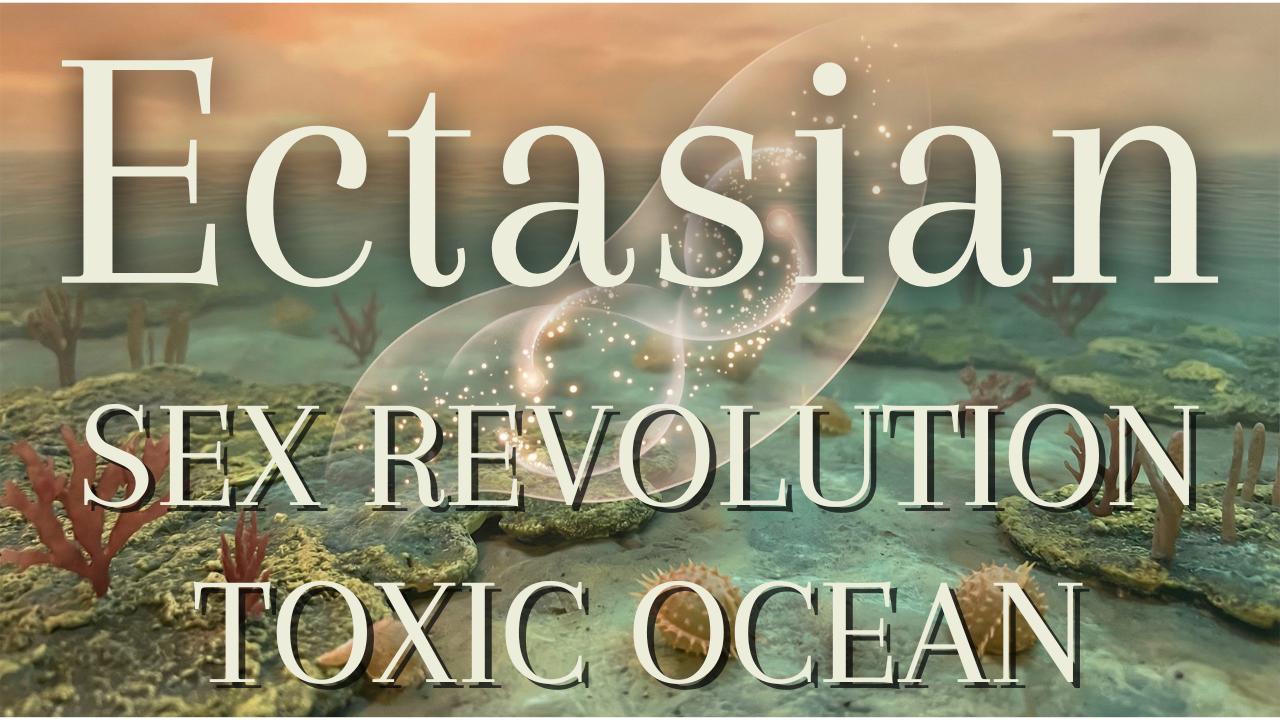
In the staggering 4.6 billion years of Earth’s history, there may be no other era so misunderstood, yet so decisive for our existence.
The name of that era is the Ectasian Period.
Spanning 200 million years from about 1.4 billion to 1.2 billion years ago, this period has long been regarded by geologists as a plain era with little change, located in the middle of “The Boring Billion.”
It lacks the flashiness of the Jurassic period where dinosaurs roamed, or the brilliance of the Cambrian period where life diversified explosively.
At first glance, the Earth seemed to be just quietly rotating.
However, recent research is dramatically overturning that perception.
In fact, the Ectasian Period was a revolutionary era when “Sexual Reproduction (Sex),” one of the greatest inventions in the history of life, was born and established.
Why did organisms need to divide into males and females?
Why did they abandon the efficient method of increasing copies alone and choose the costly survival strategy of finding a partner?
The key to solving that mystery lies in the strata and fossils of this era.
If “sex” had not been born in this era, neither humans, nor flowers, nor birds, nor insects—none of the complex life forms we see today would exist.
In this article, we thoroughly explain the full picture of the mysterious Ectasian Period based on the latest scientific findings.
Massive geological fluctuations, the separation and assembly of continents, and the unknown drama of microorganisms.
Far from “boring,” let’s start a journey together to the “turbulent” 200 million years that decided the fate of life evolution.
No specialized prerequisite knowledge is required.
Just bring your intellectual curiosity and turn the page.
Now, to the world of 1.4 billion years ago.
The ‘Complete Edition’: Everything about Ectasian Period
Liberal Arts Bundle

- Chapter 1: Definition and Etymology of the Ectasian Period: Its Place in Earth History
- Chapter 2: Life History’s Greatest Innovation: Why Was “Sex” Born
- Chapter 3: Enter the Protagonist: *Bangiomorpha pubescens*
- Chapter 15: Conclusion: What the Ectasian Period Left Us
- [Continue in the Full Version] To the Collapse of the Supercontinent, the Sea of Deadly Poison, and the Full Picture of the Mysterious Ecosystem
Chapter 1: Definition and Etymology of the Ectasian Period: Its Place in Earth History
1-1 What is the Ectasian Period: Basic Data by Numbers
First, let’s start by accurately grasping basic data about where the Ectasian Period is located in Earth’s history and in what framework it is defined.
The Ectasian Period is the second period belonging to the “Mesoproterozoic Era” within the “Proterozoic Eon” in the geologic time scale.
As for absolute age, it is defined by the International Commission on Stratigraphy (ICS) as exactly 200 million years starting from 1.4 billion years ago (1400 Ma) and ending 1.2 billion years ago (1200 Ma).
One feature is that these numbers like “1.4 billion years ago” or “1.2 billion years ago” are not delimited by boundary events such as the appearance or extinction of organisms, but by pre-determined numerical ages (GSSA: Global Standard Stratigraphic Age, not GSSP).
In other words, speaking in terms of Earth’s clock, it is a time frame partitioned strictly like a block.
Before this era was the “Calymmian Period,” and after it follows the “Stenian Period.”
These three periods (Calymmian, Ectasian, Stenian) are collectively called the Mesoproterozoic, and their total duration spans 600 million years from 1.6 billion to 1.0 billion years ago.
The Ectasian Period can be said to be an era playing a role like a “middle relief pitcher” exactly in the middle.
However, being a middle relief pitcher does not mean its importance is low.
Rather, the geological energy accumulated in the first half, the Calymmian Period, and the evolutionary potential of life reached a critical point in this Ectasian Period, leading to the upheavals in the next Stenian Period.
1-2 Origin of the Name Meaning “Extension”: Mystery of Ectasis
Where did the unfamiliar word “Ectasian” come from?
Its etymology comes from “ektasis” in Ancient Greek, meaning “extension” or “expansion.”
Why did geologists give the name “Extension” to this era?
It is deeply related to the characteristics of the strata of this era.
In this era, on each continental mass (craton) on Earth, a phenomenon where sediments spread thinly and widely to cover them, namely the “expansion of platform covers,” was notably observed.
Shallow seas and lakes spread over stable land, and sand and mud accumulate there over a long time.
It was an era when those sedimentary layers “extended” over the entire continent like spreading a tablecloth.
This geological quiet expansion was captured as one of the greatest features of the Ectasian Period, and the name was crowned.
Imagine this.
A transition from an era where rough volcanic eruptions and mountain uplifts were the protagonists to a stable world where quiet shallows spread endlessly.
This vast shallow sea became the best paradise for photosynthetic organisms discussed later and became the cradle of life evolution.
“Extension” might not just mean that the strata spread.
It can also be read as a metaphor for an era when life expanded its habitat and extended its possibilities.
1-3 As the Core of the Mesoproterozoic
To understand the Ectasian Period, it is necessary to know the character of the large framework called “Mesoproterozoic” to which it belongs.
The Mesoproterozoic is considered an era when the intense fluctuations continuing from Earth’s birth settled down for a while, and the entire Earth system entered a certain period of stability.
This stability is often expressed by the phrase “The Boring Billion.”
This refers to the fact that atmospheric oxygen concentration stabilized at a low level, and geochemical indicators such as carbon isotope ratios also showed extremely little fluctuation.
However, this “stability” was by no means “stagnation.”
Rather, the stable environment with no extreme environmental changes was an important period that gave life a grace period (moratorium) to carefully increase the complexity inside cells.
The Ectasian Period is an era when quiet but certain “signs of change” began to appear in this long-term stability.
For example, the process where the supercontinent “Columbia (or Nuna)” at the time continued to split and shift to a new continental arrangement.
Or the process where eukaryotes increased their diversity and repeated experiments towards multicellularity.
These are all processes nurtured in the stable cradle of the Mesoproterozoic.
The Ectasian Period might be, so to speak, Earth’s “adolescence.”
Even if there seemed to be no major changes on the outside, dramatic changes were progressing inside, and preparations to become an adult (complex ecosystem of the Phanerozoic) were proceeding steadily.
In this chapter, we first performed the basic setup of the stage called the Ectasian Period.
From the next chapter, we will approach the core of “the birth of sex,” the greatest drama in the history of life unfolded on this stage.
Why was such a revolution necessary in a stable world?
The answer is hidden in the fundamental survival strategy of life.
Chapter 2: Life History’s Greatest Innovation: Why Was “Sex” Born
2-1 Limits and Risks of Clonal Propagation
The biggest topic that cannot be avoided when talking about the Ectasian Period is the birth of “Sexual Reproduction.”
But why did living things come to have “sex” in the first place?
For life until then, namely prokaryotes (bacteria etc.) and early eukaryotes, reproduction meant “fission,” or making a complete copy (clone) of oneself.
This method is very efficient.
There is no need to find a partner, and no complex procedures are needed.
As long as there are nutrients, 1 becomes 2, 2 becomes 4, and they can increase infinitely in an exponential game.
However, this seemingly perfect clonal propagation had a fatal weakness.
That is “weakness to change.”
Having the same genes for everyone means that everyone has the same weakness.
If a specific virus or rapid environmental change strikes, if it is an environment where one dies, there is a risk that everyone will be wiped out.
On Earth before the Ectasian Period, life lived mainly relying only on unreliable changes called mutations while carrying this risk.
However, as eukaryotes became complex and longer-lived, this “leaving it to chance” survival strategy was reaching its limit.
2-2 Magic to Mix Genes: Recombination
So, what was invented was a revolutionary system to mix genes of different individuals, namely sexual reproduction.
This is a mechanism not to create a mere copy of the parent, but to shuffle genes from the father and genes from the mother to create a child with a “world’s only new combination of genes” different from either parent.
This is called “Genetic Recombination” in technical terms.
The revolutionary point of this system is that diversity can be created “intentionally and explosively.”
Even siblings do not have exactly the same genes (except for identical twins).
This ensures that diverse variations are always pooled in the group.
One individual might be strong against heat, another might be strong against a new disease.
When the environment changes drastically, if you have diverse hands, the probability that someone will survive increases dramatically.
The invention of the Ectasian Period shifted life from a “chain of copies” to “creation of variations.”
2-3 What They Anyhow Wanted to Get Paying “Double Cost of Sex”
There is a famous paradox in biology called “the two-fold cost of sex.”
To perform sexual reproduction, since males do not bear children, compared to asexual reproduction where only females increase, the proliferation efficiency becomes half by simple calculation.
Furthermore, sex involves enormous costs such as the trouble of finding a partner, energy consumption accompanying courtship behavior, and risk of predation.
Why did the creatures of the Ectasian Period choose sex even paying such high costs?
It might be paradoxically related to the fact that this era was “Boring.”
Under a stable environment, competition between organisms intensifies.
It becomes necessary to stand even slightly superior to neighbors over limited resources (niches).
Also, it is thought that the necessity to purge harmful genetic mutations accumulated by living for a long time through the mechanism of sex (such as repair function) was also increasing.
In other words, the “stability” of the Ectasian Period provided a testing ground to try the high-cost, high-return strategy of “sex” and became the soil to establish it.
We, 1.2 billion years later, are enjoying the benefits of the “evolutionary cost” paid in this era.
Chapter 3: Enter the Protagonist: *Bangiomorpha pubescens*
3-1 Discovery on Somerset Island, Canada
Even if there is a theory that sexual reproduction began, is there any evidence?
The decisive evidence was found from barren rocky areas of Somerset Island located in the Canadian Arctic.
Microfossils found from a stratum of about 1.2 billion years ago (late Ectasian) called the “Hunting Formation.”
That is the protagonist of this story, “*Bangiomorpha pubescens*.”
At first glance, it may look like just filamentous algae only visible under a microscope.
However, the meaning this fossil holds is immeasurable.
This is one of the oldest organisms on Earth that can be clearly identified from morphological features as a relative of living “red algae,” that is, close to Nori.
As the “oldest eukaryote that can be assigned taxonomically to a living group,” the name of *Bangiomorpha* is carved in bold in paleontology textbooks.
3-2 Origin of Male and Female: Traces of Clear Distinction
The reason *Bangiomorpha* is a superstar is not just because it is old.
It is because the world’s first “evidence of gender” was carved in this fossil.
Through detailed research by Dr. Nicholas Butterfield and others, two types of reproductive cells with clearly different functions were confirmed in the cell structure of *Bangiomorpha*.
One is a large cell storing nutrients.
The other is a small and numerous cell.
These correspond to “eggs (or ova)” and “sperm” in modern organisms.
It strongly suggests that distinct oogamy, where roles are clarified, was performed, advancing one step from the primitive form where isomorphic gametes unite.
This discovery was shocking.
It was proven that in the sea of the Ectasian Period 1.2 billion years ago, “males and females (or sexual dimorphism equivalent to it)” in the modern sense already existed and led a complex life cycle.
3-3 Milestone to Multicellularity
*Bangiomorpha* was also highly complete as a multicellular organism.
Not just cells sticking together, it had a part acting as a root (holdfast) and a structure to anchor to substrates like rocks to support the body.
This means that cells communicated with each other and performed differentiation, saying “You become a root, I’ll become a leaf.”
Evolution from a mere collection of cells (colony) to an integrated multicellular individual.
And acquisition of genetic diversity by sexual reproduction.
*Bangiomorpha pubescens* eloquently tells with its small body that the Ectasian Period was never an “era of stagnation” for life, but a “eve of revolution” steadily polishing weapons for the coming explosive evolution.
This small red alga is the great predecessor of us multicellular organisms.
Chapter 15: Conclusion: What the Ectasian Period Left Us
15-1 The Strongest Weapon Called “Sex”
The Ectasian Period 1.4 billion years ago.
It was not an era when Earth was sleeping quietly in the middle of “The Boring Billion.”
It was an era of revolution when life first dabbled in the gamble called “Sex,” which has risks but holds infinite possibilities.
If organisms like *Bangiomorpha* had not invented sex in this era, the speed of evolution would have been too slow, and complex intelligent beings like humans would not have been born yet.
Perhaps Earth might still have been a silent planet dominated only by bacteria.
That we now have families, love lovers, and create societies with various personalities.
The root of all that goes back to the encounter of small cells that happened in the sea of this Ectasian Period.
15-2 Innovation Resides in Boredom
There is another lesson to be learned from the Ectasian Period.
That is “a stable period where nothing seems to be happening at first glance is actually a preparation period for internal fulfillment and leap.”
Just because there are no flashy events doesn’t mean evolution has stopped.
Seeds of innovation that open up the next era are sown in the accumulation of plain and inconspicuous days.
Like an athlete practicing where no one is watching in a park at midnight, life in the Ectasian Period was earnestly polishing cell functions in the quiet sea.
That effort bloomed in the later Cambrian Period and connects to us now.
15-3 Thinking of the Beyond of 1.4 Billion Years
After reading this article, when looking up at the night sky or gazing at the sea, please imagine a little.
The sea of 1.4 billion years ago with thin oxygen, which might have smelled of rotten eggs.
The small red algae that lived desperately there and sought a partner for the first time.
They are nameless pioneers, but they are undeniably our distant, distant ancestors.
The Ectasian Period.
Its name means “Extension.”
It is the name of an era of hope where the possibilities of life began to expand infinitely.
[Continue in the Full Version] To the Collapse of the Supercontinent, the Sea of Deadly Poison, and the Full Picture of the Mysterious Ecosystem
Thank you for reading this far.
This free version centered on the “Birth of Sex,” which is a highlight of the Ectasian Period, but this is just a small part (introduction) of the magnificent drama extending to 30,000 characters.
In the full version (Kindle/Blog), we invite you to a deeper, more profound world.
[What you can read in the Full Version]
✅ Why did animal evolution stop for 1 billion years?
The terror of the deadly toxic “Sulfidic Ocean (Canfield Ocean)” and the survival techniques of life that survived on the verge of suffocation.
✅ Witness the moment continents are torn apart
The great breakup of Supercontinent Columbia and the largest volcanic activity in history, “Mackenzie Dike Swarm.” Detailed explanation of the turbulent geological events where the earth splits and magma burns up the world.
✅ To a Virtual Geology Field Trip
From the Canadian Arctic to American National Parks and Norwegian Fjords. A detailed field trip guide (appendix) visiting strata of 1.4 billion years ago that still remain.
✅ 9 Maniac Luxury Appendices
Overwhelming amount of knowledge not found in textbooks, such as “Deepening Theory of Evolutionary Biology,” “Complete Geologic Time Comparison Chronology,” and “50 Unknown Trivia.”
Please confirm with your own eyes the “True Story” of the era called “The Boring Billion” that no one knows.
The ‘Complete Edition’: Everything about Ectasian Period
Liberal Arts Bundle


コメント