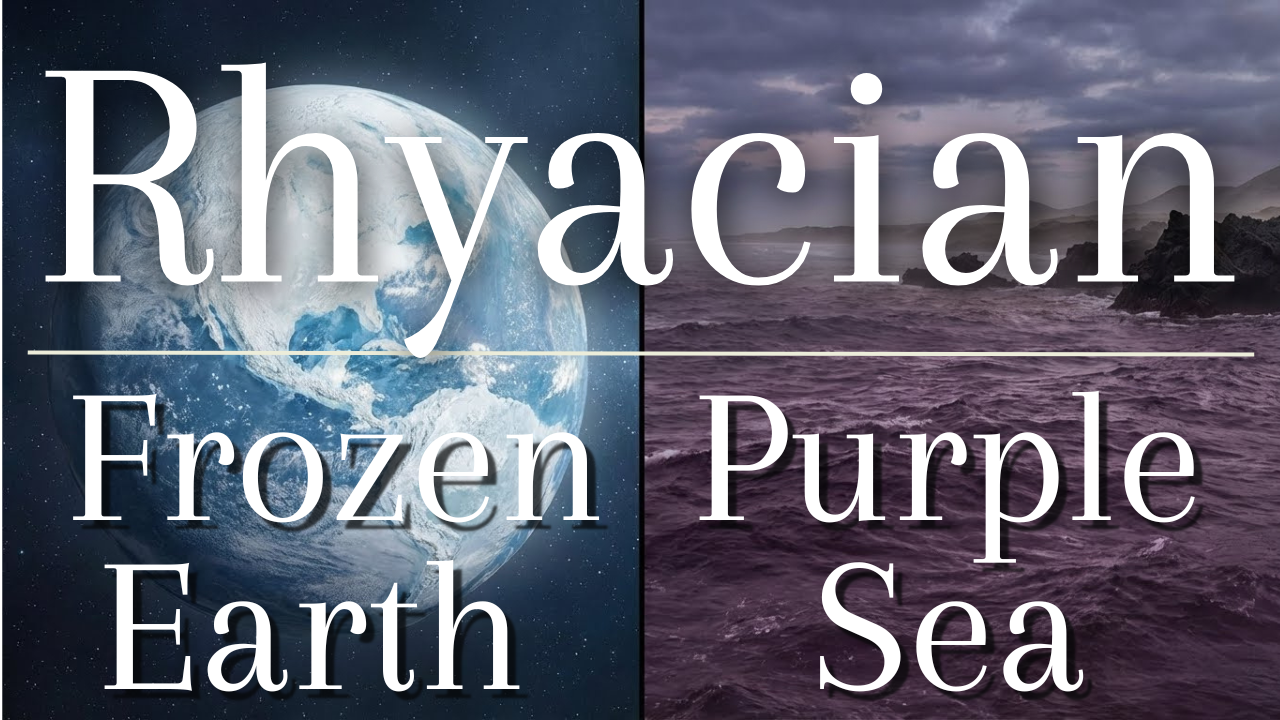
- Introduction: Welcome to Earth’s Most “Alien” 250 Million Years
- Shock #1: When Earth Was a “White Planet”
- Shock #2: History’s Greatest Carbon Anomaly — “The Lomagundi Event”
- Shock #3: The Mysterious Multicellular Organisms — “Francevillian Biota”
- Shock #4: The Purple Sea — “A Gas Chamber”
- Shock #5: Continental Drift and a “Blow” from Space
- Our Origin: The Birth of Eukaryotes — “Eukaryogenesis”
- The Mysterious Gemstone “Shungite” and 2-Billion-Year-Old Legacy
- The COMPLETE VERSION Reveals the Full Story of “The Lost 250 Million Years”
Introduction: Welcome to Earth’s Most “Alien” 250 Million Years
Did you know that approximately 2.3 billion years ago—long before any human existed—a series of “decisive events” occurred on Earth that directly determine whether you can breathe right now?
Those events were the establishment of atmospheric oxygen and the birth of “eukaryotes”—the ancestors of all complex life.
The Rhyacian Period is one of the most dynamic and mystery-filled intervals in all of Earth’s history.
You learned about dinosaurs in school. You learned about the Cambrian Explosion. But did anyone ever teach you about the era that made those later developments possible?
Yet Earth during this time was like an “alien planet.”
The sky glowed reddish, the oceans shimmered purple and green, the Moon appeared much larger in the sky, and a day lasted only 15 hours.
Through this journey to a grand otherworld, you will gain not just geological knowledge, but a perspective to survey the entire Earth system.
In this article, based on the latest scientific findings and academic papers, we paint a picture of the Rhyacian Period with unprecedented resolution—technical yet accessible.
For professionals seeking intellectual enrichment, those who want to touch the unexplored romance of science, and anyone who wants to be overwhelmed by the history of this miraculous planet called Earth.
This is a special preview featuring the most shocking episodes from the complete 70,000-character “Full Earth History” edition.
The ‘Complete Edition’: Everything about Rhyacian Period
Liberal Arts Bundle

Shock #1: When Earth Was a “White Planet”
Snowball Earth: A World at -50°C
The dawn of the Rhyacian Period was accompanied by an extremely cold silence.
This was the “Huronian Glaciation.”
This ice age is thought to have lasted intermittently from approximately 2.4 billion to 2.1 billion years ago.
Among these glacial periods, the “Makganyene Glaciation” in the early Rhyacian was particularly extreme.
This phenomenon, where ice sheets expanded to near the equator, is considered one of the first confirmed pieces of evidence for the “Snowball Earth” hypothesis.
At that time, Earth seen from space was literally a “white planet,” continuously reflecting sunlight (albedo effect) and unable to escape the cooling loop.
Average temperatures may have dropped below minus 50 degrees Celsius, with sea surfaces covered by ice over 1,000 meters thick.
Imagine it: a landscape of ice stretching as far as the eye can see, a world of death with no sign of life.
Yet this desperate cold may have been the very “pressure” that drove life to evolve.
Hard or Slush? The Debate That Never Ends
There is intense debate among scientists about the degree of freezing at this time.
One view is the “Hard Snowball” hypothesis—even tropical seas were completely covered with thick ice, leaving liquid water only in the deep sea or around some volcanoes.
In this case, the situation would have been devastating for photosynthetic organisms, and life would have faced extinction crisis.
Another view is the “Slushball Earth” hypothesis—thin ice or slushy, sherbet-like seas remained open near the equator.
If this “open sea” existed, sunlight could reach the seawater, allowing photosynthetic organisms like cyanobacteria to survive marginally.
One of the mysteries of the Rhyacian Period is how life managed to survive this extreme environment.
Shock #2: History’s Greatest Carbon Anomaly — “The Lomagundi Event”
Two Billion Years When Earth Was Buried in Organic Matter
Another giant event characterizing the Rhyacian Period is the “Lomagundi-Jatuli Event (LJE).”
This refers to the most dramatic “carbon isotope ratio anomaly” in Earth’s history, occurring from 2.22 billion to 2.06 billion years ago.
Carbon isotope ratios (δ13C) in geological strata spiked from the normal 0‰ range to extraordinary values of “+10‰ to +28‰.”
This number means only one thing: “An abnormal amount of organic matter (dead organisms) was buried underground without decomposing.”
Normally, dead organisms are decomposed by bacteria and returned to the atmosphere as carbon dioxide.
However, during this era, for some reason that cycle broke down, and enormous amounts of carbon were “spirited away” deep underground.
This “massive burial of organic matter” was the engine of the Rhyacian Period’s environmental upheaval.
Did “Phosphorus” Trigger Life’s Runaway?
Why did organisms (mainly cyanobacteria) explode in population and get buried in such quantities?
One prevailing theory is the massive supply of “Phosphorus” from continents.
Due to warming and intense weathering after the Snowball Earth ended, phosphorus from rocks flowed inexhaustibly into the sea.
Phosphorus is essentially “natural fertilizer.”
In nutrient-rich seas, cyanobacteria proliferated explosively, pumping out oxygen.
As a result, oxygen levels temporarily reached modern concentrations—or possibly even higher (oxygen overshoot).
This excessive oxygen created the conditions for the next “monster” to emerge.
Shock #3: The Mysterious Multicellular Organisms — “Francevillian Biota”
“Impossible” Fossils from 2.1 Billion Years Ago
In 2010, a paper published in the scientific journal “Nature” sent shockwaves through the paleontological community.
From 2.1-billion-year-old strata in the Republic of Gabon, West Africa, “large fossils” up to 17 centimeters were discovered.
Until then, it was believed that life forms of this era were at most microscopic bacteria.
Yet the discovered “Francevillian Biota” were clearly visible-sized with complex shapes.
Flat disc-shaped ones, elongated ones, ones with folds around them…
X-ray CT scans have even confirmed organized internal structures.
The discoverer, Professor El Albani, claims these are “the oldest multicellular eukaryotes.”
They may have had the ability to communicate between cells and move cooperatively.
If true, the history of complex life would be pushed back by 1.5 billion years.
Were they “premature flowers” created by the high-oxygen environment?
Shock #4: The Purple Sea — “A Gas Chamber”
Beautiful Yet Terrifying: The “Canfield Ocean”
If you could look down at the Rhyacian Period sea from a spaceship, you would witness dramatic color changes.
The early sea was reddish-brown, but toward the end, as sulfur bacteria flourished, the color transformed completely.
Due to sulfur bacteria pigments, the sea surface may have appeared purple (Purple Ocean), pink, or an eerie green.
This sulfidic sea was a world of death for newly born eukaryotes.
The hydrogen sulfide filling the sea was a deadly poison that stops mitochondrial respiration.
Furthermore, hydrogen sulfide precipitated metals like zinc and copper essential for life, driving organisms into “metal starvation.”
Far from the beautiful modern Earth with its blue sea and white clouds—a toxic yet fantastical landscape like an “alien planet.”
That was the true face of the Rhyacian Period.
Shock #5: Continental Drift and a “Blow” from Space
The World’s Oldest Crater: “Yarrabubba”
Not just continental movement, but “intervention” from space also occurred.
The “Yarrabubba crater” discovered in Western Australia is Earth’s oldest confirmed crater, formed about 2.229 billion years ago.
The 70-km diameter meteorite impact coincides exactly with the timing when the ice age ended.
The shock may have melted the ice sheet, with massive water vapor acting as a greenhouse gas to liberate Earth from its freezer.
Prelude to Supercontinent “Columbia”
The latter half of the Rhyacian Period was also when scattered continents began to reassemble.
Continental collisions occurred worldwide, forming massive mountain ranges.
This was the beginning of construction of the supercontinent “Columbia (Nuna)” that would be completed in the next era.
The land moved, the ocean changed color, life wandered between evolution and extinction.
The Rhyacian Period was by no means a “boring era” but an intense “trial and error period” that created today’s Earth.
Our Origin: The Birth of Eukaryotes — “Eukaryogenesis”
Within those toxic yet turbulent seas, the greatest technological innovation in the history of life occurred.
The birth of “Eukaryotes.”
Plants, animals, fungi, protists, and we humans all belong to this group.
The long-standing mystery of “who, when, and how became a eukaryote?”
The key is the “Asgard archaea” discovered in the deep sea of the North Atlantic.
Our eukaryotic ancestor started when this archaeon took in bacteria that could use oxygen (later becoming mitochondria) and established symbiosis.
This is called “Eukaryogenesis.”
The sea where oxygen levels were rising was an ideal stage for this hybrid organism capable of high-efficiency energy production to be born.
The Mysterious Gemstone “Shungite” and 2-Billion-Year-Old Legacy
The Rhyacian Period also produced mysterious minerals relevant to our modern lives. One is “Shungite.”
This black stone produced in the Republic of Karelia, Russia, is metamorphosed 2-billion-year-old organic matter.
Mysteriously, it contains special carbon structures like “fullerenes (C60)” and “nanotubes” that are normally only made in laboratories.
Thanks to these special structures, shungite has powerful antioxidant effects and electromagnetic wave absorption capabilities, remaining popular as a “healing stone” even today.
The remains of organisms from the Rhyacian Period are protecting our lives even after 2 billion years.
The COMPLETE VERSION Reveals the Full Story of “The Lost 250 Million Years”
What did you think?
The desperate cold of Snowball Earth, seafloors buried in organic matter, purple poison seas, and the miraculous fusion of life that occurred within.
The Rhyacian Period was more “science fiction-like” and dramatic than we ever imagined.
The complete version (approximately 70,000 characters) provides detailed explanations of even more shocking facts that couldn’t be covered in this preview:
- Detailed Mechanism Explanations: “Why” did the ice age end? “Why” did oxygen decrease again? Scientific explanations based on the latest papers.
- The Mystery of the Bushveld Complex: How was the world’s largest platinum deposit formed?
- Detailed Timeline and Glossary: Appendices allowing you to understand the complex events of the Rhyacian Period at a glance.
The drama that occurred on Earth 2.3 billion years ago provides extremely important insights for thinking about modern environmental issues and the future of life.
Experience the “true Earth history” not found in textbooks in the complete version.
The ‘Complete Edition’: Everything about Rhyacian Period
Liberal Arts Bundle
コメント