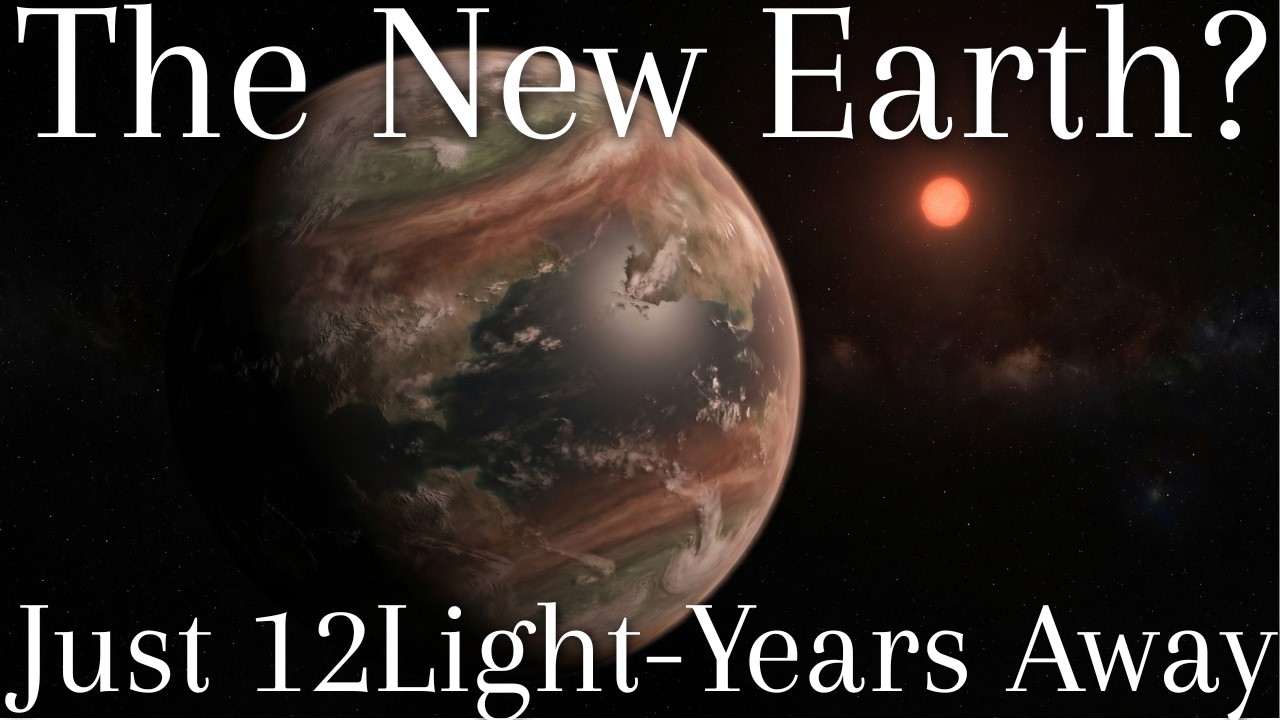
- A Planet Scoring 0.95 on the Earth Similarity Index — and It Is Only 12 Light-Years Away
- What Is Teegarden’s Star b? — Basic Profile of the Exoplanet
- How Was This Earth-Like Exoplanet Discovered? — From Red Dwarf Star to Planetary System
- 12 Light-Years from Earth — What That Distance Really Means for Space Exploration
- Why Teegarden’s Star b Remains One of the Most Watched Exoplanets
- A Guide to Exploring Exoplanets and the Search for Life
A Planet Scoring 0.95 on the Earth Similarity Index — and It Is Only 12 Light-Years Away
Out of more than 5,000 confirmed exoplanets, one stands apart.
It is roughly the same mass as Earth. It orbits inside its star’s habitable zone. And by the most widely used metric for comparing a world to our own, it earned a score that no other planet has matched.
That planet is Teegarden’s Star b, and the number is 0.95 out of a possible 1.0 on the Earth Similarity Index.
The story of how astronomers found it — using a telescope in the Spanish mountains, a detection method that tracks the faintest wobble of a distant star, and more than 300 nights of patient observation — is as striking as the planet itself.
Below, we walk through the planet’s basic profile, the sequence of discoveries that brought it to light, and what it means that this world sits a mere 12 light-years from our solar system.
Prefer to watch? This video walks through Teegarden’s Star b: how it was found, what its Earth Similarity Index of 0.95 really means, and what we still do not know.
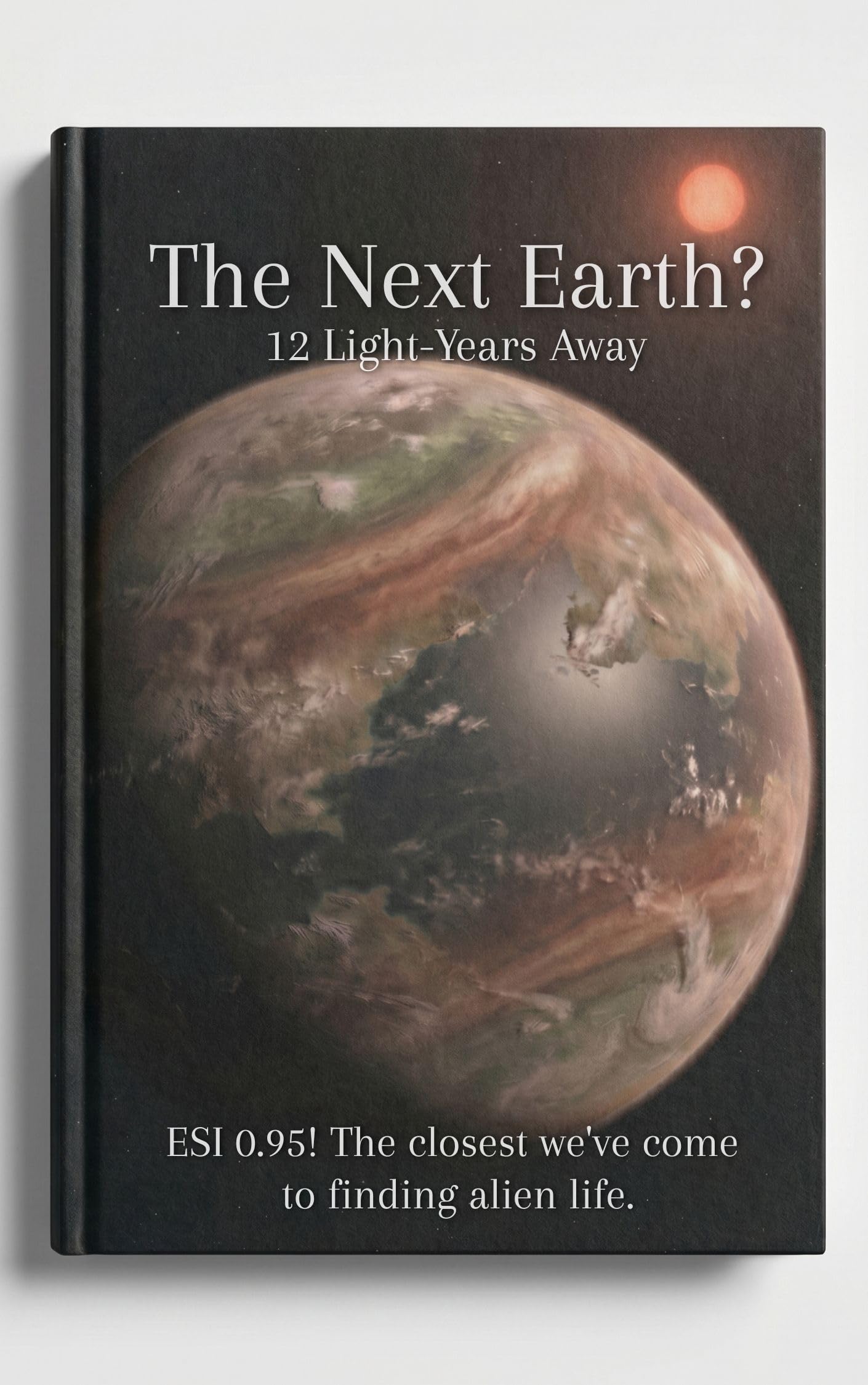
The complete edition on Kindle: everything about Teegarden’s Star b, from orbit and climate to the search for life
Liberal Arts Bundle: read this book alongside our other English-language guides to science and history

What Is Teegarden’s Star b? — Basic Profile of the Exoplanet
Chapter 1 What is Tea Garden Planet b?—Basic profile of the planet
Shock of discovery and worldwide attention
In June 2019, a paper was published in the international astronomical journal “Astronomy & Astrophysics”.
The authors are an international research team led by astronomer Matthias Sechmeister of the University of Göttingen in Germany, who reported that they had discovered two terrestrial planets around the star Teagarden.
This announcement caused a huge stir not only in the astronomical community but also in the general media.
This is because one of the discovered planets, Teegarden B, has an unprecedentedly high Earth similarity index of 0.95.
This number represents how similar multiple physical parameters such as surface temperature, planetary radius, and escape velocity are to Earth on a scale of 0 to 1, with 1.0 corresponding to Earth itself.
The value of 0.95 was by far the highest among the approximately 4,000 exoplanets that had been discovered, and researchers around the world began to pay attention to this planet.
List of basic planet data
The main characteristics of Tea Garden Star B are summarized as follows.
First, regarding its orbit, it revolves around its main star, Teegarden, at a very short period of about 4.91 days.
The distance from the host star is approximately 0.0252 astronomical units (the distance between the Earth and the Sun is 1), which is only 1/40th of the distance between the Earth and the Sun.
However, the main star, Teagarden, is a red dwarf star that is significantly smaller and fainter than the Sun, so it is possible that it will maintain a mild temperature environment even if it orbits that close.
It is estimated that its mass is approximately 1.05 times that of Earth, and its radius is approximately the same or slightly larger than Earth, so it is highly likely to be a rocky planet.
Estimates of the surface temperature vary greatly depending on the presence or absence of an atmosphere and its composition, but researchers have estimated that it would be around -47 degrees Celsius in the absence of an atmosphere, and around 28 degrees Celsius in the case of an Earth-like atmosphere.
Origin of the name “Tea Garden”
The word “tea garden” in the planet’s name comes from the name of the star it orbits, rather than the proper name of the planet itself.
Teegarden is a red dwarf star named after American astronomer Bonnie Teegarden and discovered in 2003 by her and colleagues at NASA’s Goddard Space Flight Center.
The official identifier for this star is “SO J025300.5+165258,” but it is commonly referred to as Teegarden’s Star, named after its discoverer.
The first planet discovered to revolve around this star was named Teegarden B, and the second discovered Teegarden C, in accordance with the naming conventions of the International Astronomical Union, and these names are still widely used today.
Position in the history of exoplanet exploration
An exoplanet is a planet that orbits a star other than the sun.
Humanity first confirmed the existence of exoplanets in 1992, and since then, the number of discoveries has increased explosively as observation technology has improved.
The number of exoplanets currently confirmed is over 5,000, and these include a wide variety of celestial bodies, from giant gas planets to small rocky planets.
However, the majority of them do not meet any of the conditions considered necessary for life to exist: suitable temperatures, orbits that can support liquid water, and rocky surfaces.
The reason Teegarden Star b is attracting so much attention is that it is a uniquely attractive candidate object at the moment in that it has the possibility of satisfying multiple conditions at the same time.
When this combination of near-Earth-like mass, orbit within the habitable zone, and highest score on the Earth-similarity index combined, astronomers were understandably excited.
How Was This Earth-Like Exoplanet Discovered? — From Red Dwarf Star to Planetary System
Chapter 2: History of discovery and observation history
The planet did not reveal itself overnight. Its discovery unfolded across two separate breakthroughs — first the star, then the planets around it.
Discovery of Tea Garden Star (2003)
The discovery of Teagarden Star b was preceded by the discovery of its host star, Teagarden Star.
In 2003, a research team including Bonnie Teagarden from NASA’s Goddard Space Flight Center discovered a celestial object exhibiting unusual movement while analyzing near-infrared survey data.
This celestial body had a particularly remarkable phenomenon called proper motion, in which the star actually appears to be moving across the celestial sphere, and its speed was extremely large, approximately 5.1 angular seconds per year.
Stars with large proper motions are generally located close to the Earth, and precise observations confirmed that this celestial body is approximately 12 light-years from Earth.
This distance is included in the 20 closest star systems to the solar system, and in astronomical terms, it is so close that it can be called “right next door.”
Observation program for planet discovery
Tea Garden Star b was discovered in 2019, 16 years after the discovery of Tea Garden Star.
During this time, researchers conducted an observation program called “Carmenes” led by the University of Göttingen in Germany to investigate whether there are planets around the Teegarden star.
Carmenes is an observation device using a 3.5 meter telescope located in the Sierra Nevada Mountains of Spain, and is designed specifically to search for planets around red dwarf stars.
This program adopted an indirect planet detection method called the radial velocity method.
When a planet orbits a star, its gravity causes the star to shake slightly.
The radial velocity method detects this wobbling by precisely analyzing the star’s spectrum (changes in the wavelength of light), and is an excellent method for estimating the existence of a planet without directly capturing its light.
Discovery process using radial velocity method
The research team observed Teagarden more than 300 times between 2016 and 2018.
As a result, two periodic fluctuations in the star’s radial velocity were detected.
One has a cycle of about 4.91 days and the other has a cycle of about 11.4 days.
These periodic fluctuations were interpreted to be caused by the two planets orbiting Teegarden in different orbits.
The results of this analysis were announced in 2019, and the existence of Tea Garden Star B and Tea Garden Star C became known to the world.
Note that when detected using the radial velocity method, the mass of a planet is generally reported as the “minimum mass,” and the actual mass may be even higher because the orbital inclination is unknown.
The minimum mass of Teegarden star b is estimated to be about 1.05 times that of Earth, but depending on the inclination of its orbit, the possibility that it is a larger planet cannot be ruled out.
Follow-up observation and accuracy improvement after discovery
After the discovery paper was published in 2019, observatories around the world attempted to observe Teagarden Star again.
Several independent research groups have reanalyzed the radial velocity data and obtained results that support the existence of a two-planet system.
Confirmation using the transit method (a method that detects the dimming of a star that occurs when a planet passes in front of its host star) has also been attempted, but it has not yet been confirmed whether the orbital inclination of Teagarden Star b matches the line of sight from Earth.
If a transit phenomenon is confirmed, researchers will be able to directly measure the radius of the planet and also be able to analyze the composition of its atmosphere, so researchers are waiting for that opportunity.
Even now, several years after its discovery, the Tea Garden system continues to attract the attention of a wide range of researchers, from amateurs to professional astronomers, and observational data continues to be accumulated and analyzed.
12 Light-Years from Earth — What That Distance Really Means for Space Exploration
Chapter 5 Distance from Earth——The meaning of 12 light years
Numbers on this scale are hard to feel. The following comparisons bring the distance into sharper focus.
How far is 12 light years?
The distance to Tea Garden Star B is approximately 12 light years.
A “light year” is the distance that light travels in one year, which is approximately 9.46 trillion kilometers.
Therefore, 12 light years is 12 times the distance of approximately 9.46 trillion kilometers, or approximately 113.52 trillion kilometers.
Let me give you some comparisons to get an intuitive idea of how far this is.
Voyager 1, currently known as the fastest space probe, has reached a distance of approximately 23 billion kilometers from the sun in about 47 years since its launch in 1977.
If we were to head towards Tea Garden Planet B at this pace, it would take approximately 220,000 years to arrive.
Also, it takes about 8 minutes and 20 seconds for light to reach the Sun from the Earth, but even light takes about 12 years to reach Tea Garden Star B.
So if you see Teagarden Star in the sky tonight, you’re looking at the light that left Teagarden Star about 12 years ago.
Distance comparison with stars near the solar system
A distance of 12 light years can be considered a “neighborhood” from the perspective of the entire universe.
The closest star to our solar system is Proxima Centauri, which is approximately 4.24 light years away.
Alpha Centauri A and B systems are next at about 4.37 light-years, Barnard’s star at about 5.96 light-years, Wolf 359 at about 7.78 light-years, Lalande 21185 at about 8.29 light-years, and Teegarden star is about 12 light-years from the sun, making it around the 20th star closest to the sun.
However, even “neighborhood” is a distance that cannot be reached with current technology, and in order for humans to directly visit Teagarden Planet B within a realistic amount of time, a spacecraft that can fly at speeds close to the speed of light is required.
Scientific meaning of distance
The closeness has great advantages in terms of observation.
Even if objects have the same brightness and size, the closer they are to Earth, the easier it is to observe them, and the more detailed data can be obtained.
The relatively close distance of Teagarden B, 12 light-years, makes it a realistic goal to directly observe the atmosphere using large telescopes in the future, and even capture the planet’s appearance through direct imaging.
For example, next-generation space telescopes such as the Extremely Large Telescope (ELT) currently under construction and Nautilus, which is planned for the future, are expected to have the ability to spectroscopically analyze the atmospheres of terrestrial planets orbiting nearby star systems.
The proximity of Teagarden Star b puts it at the forefront as a prime target for such observations.
Possibility of radio communication
From the perspective of alien exploration (SETI activities), the 12 light-year distance to Teagarden Star b has a different meaning.
Even if an intelligent life form existed on Tea Garden Planet B and sent radio waves toward Earth, it would take 12 years for those radio waves to reach Earth.
Conversely, if you send radio waves from Earth, it will take at least 24 years to receive a response.
This is a very long time for a conversation, but it is also a distance that allows realistic communication on a cosmic scale.
In fact, observations are being made using radio telescopes to detect abnormal radio signals coming from the direction of Teegarden Star, indicating that this planet is positioned as an important candidate for alien exploration.
Why Teegarden’s Star b Remains One of the Most Watched Exoplanets
Three facts set Teegarden’s Star b apart from the thousands of other worlds catalogued so far: a near-perfect Earth Similarity Index score, a discovery story rooted in years of methodical observation, and a distance close enough that the next generation of telescopes may be able to study its atmosphere directly.
None of those facts, on their own, guarantee habitability. But taken together, they make this planet one of the strongest candidates humanity has ever identified for further investigation — a world where the basic prerequisites for liquid water and stable surface conditions may actually be met.
The questions that remain — whether an atmosphere exists, whether water flows on its surface, whether any form of life could survive the conditions around a red dwarf star — are exactly the questions that the full version of this guide was written to explore.
Want the rest of the story? The complete edition, Exoplanet Teegarden’s Star b: The Search for the Most Earth-Like Planet in the Universe, goes much further: the 4.9-day orbit and the habitable zone, theoretical models of the planet’s atmosphere and the search for oxygen, the possibility of liquid water and ice, and what the Drake Equation suggests about life beyond Earth.
You have two ways to keep reading: get the full guide on Kindle, or read it together with the rest of our English-language guides in the Liberal Arts Bundle.
The complete edition on Kindle: everything about Teegarden’s Star b, from orbit and climate to the search for life
Liberal Arts Bundle: read this book alongside our other English-language guides to science and history
A Guide to Exploring Exoplanets and the Search for Life
- Proxima Centauri b Explained: The Closest Known Exoplanet, Its Habitable Zone, and the Search for Life — Compare Teegarden’s Star b with the nearest known exoplanet, another rocky world orbiting a red dwarf in its habitable zone.


コメント