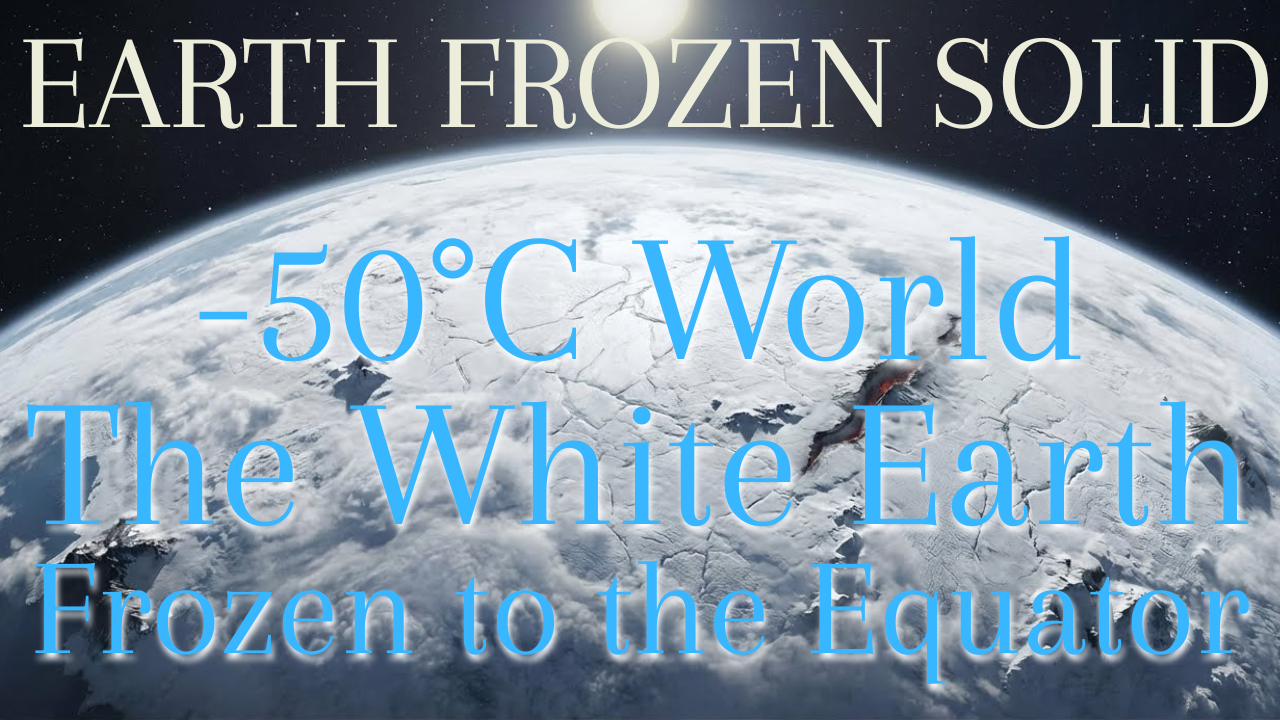
Throughout Earth’s staggering 4.6 billion year history, perhaps no other era was as harsh or as enveloped in silence as this one.
A time when even the oceans directly under the equator were locked in ice, appearing from space like a gleaming white snowball.
This is the “Cryogenian Period”.
Imagine it.
A scene where an icy world like present-day Antarctica extended to where New York, Tokyo, and even tropical islands like Hawaii now stand.
Average temperatures plummeted below minus 50 degrees Celsius, and life’s activities were restricted to the absolute limit.
However, did you know that this seemingly desperate age of ice was actually a crucially important preparatory period for the birth of complex life systems, including us “animals”?
Why did the Earth freeze?
And how did life survive under the thick ice and undergo such dramatic evolution?
Researches in modern geology and paleontology are revealing that this ice age was not simply a “world of death”, but a “cradle era” that accumulated explosive energy for the evolution of life.
In this article, we will unravel the amazing truths of the Cryogenian Period, focusing on the “Snowball Earth” hypothesis, one of the greatest mysteries in Earth’s history.
We will decode the memories carved into rocks and explain in detail, based on scientific findings, the dramatic story that unfolded on the frozen Earth.
Let us depart on a journey to the frozen world of 700 million years ago.
This is also a journey to explore our own roots.
The ‘Complete Edition’: Everything about Cryogenian Period
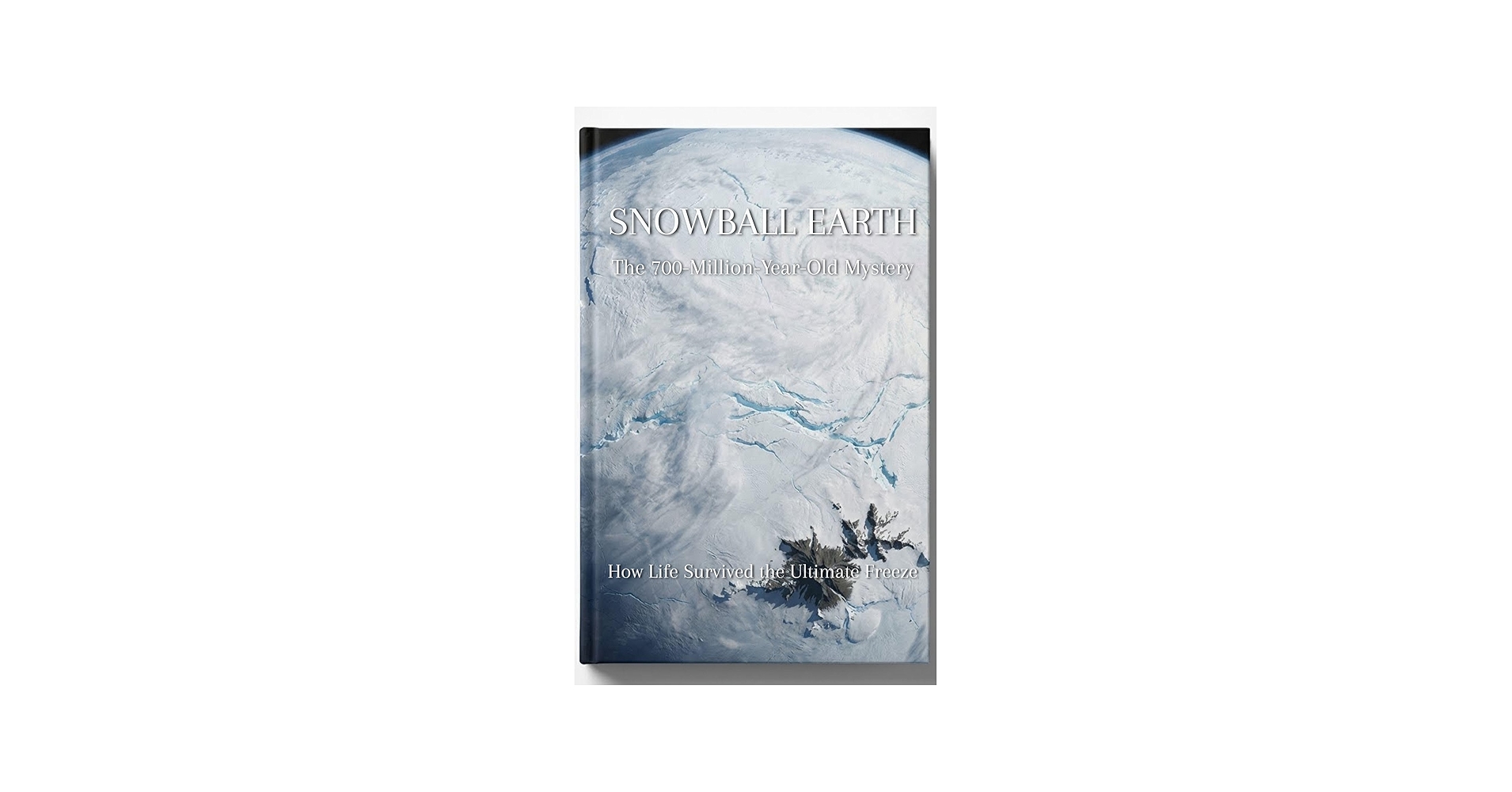
Chapter 1: Defining the Ice Age: What is the Cryogenian?
The Cryogenian Period is a division of the geologic timescale, positioned as the second to last period of the Proterozoic Eon.
Specifically, it refers to a span of approximately 85 million years, estimated to have begun about 720 million years ago and ended about 635 million years ago.
The name of this era is derived from the Greek words “krýos” meaning “ice” or “cold”, and “génesis” meaning “birth” or “origin”.
In other words, it implies the “birth of ice” or “the era when a cold climate was generated”.
As the name suggests, the Cryogenian is known as the era when the coldest climate in Earth’s history dominated.
Geological evidence suggests that during this period, extreme ice ages visited the Earth at least twice, covering the entire planet with ice sheets down to near the equator.
This is the so-called “Snowball Earth” phenomenon.
In normal ice ages, ice sheets expand only from the polar regions to the mid-latitudes, but the ice ages of the Cryogenian were of a different dimension.
It is believed that not only the land but also the surface of the oceans was covered with ice as thick as 1,000 meters.
Because the ice reflected most of the sunlight, the Earth continued to lose heat to space, falling into an inescapable spiral of cooling.
The definition of this era is based on the International Chronostratigraphic Chart (ICS) ratified by the International Union of Geological Sciences (IUGS).
However, unlike other geological eras, the start date of the Cryogenian (720 million years ago) is not strictly defined by a specific fossil or stratigraphic boundary (GSSP), but is tentatively set as a numerical age (GSSA) based on radiometric dating.
This is due to the variation in dating data obtained from strata around the world and the fact that strata have been eroded away by intense glacial action in many places.
On the other hand, the end time (635 million years ago) is relatively clearly defined by the appearance of clear geological evidence associated with a global warming event, the so-called “Cap Carbonates”.
Preceding the Cryogenian was the “Tonian Period”, and following it was the “Ediacaran Period”, when multicellular animals flourished explosively.
In other words, the Cryogenian is located at a “dramatic turning point” where the Earth transformed from a world of early simple microorganisms to a world where complex organisms of visible size walked.
Before this period classification was formally established, it was sometimes called the late Riphean or early Vendian, but it is now widely recognized as an independent era characterized by the presence of global glacial deposits.
Geologists have reconstructed the harsh environment of this era by investigating rocks called “diamictites (glacial sedimentary rocks)” left in various parts of the world.
Diamictite is a rock formed when rocks of various sizes scraped off by glaciers accumulated disorderly together with mud and sand and solidified, serving as definitive evidence that a glacier once existed in that place.
Interestingly, when the continental configuration of that time is reconstructed, Cryogenian diamictites are found even in regions that should have been directly under the equator.
This has become one of the strongest grounds for the Snowball Earth hypothesis that “it froze even to the equator”.
Also, the atmospheric composition and ocean chemistry of this era were significantly different from today.
Oxygen concentrations are believed to have been lower than today, but a rapid increase was seen at the end of the ice age, and the prevailing theory is that this had a major impact on subsequent biological evolution.
The Cryogenian was not merely a “cold era”.
It was a dynamic and revolutionary era where the Earth system itself fluctuated with extreme amplitude, and in that upheaval, life sought new survival strategies and took a decisive step toward multicellularity.
Chapter 4: The Sturtian Glaciation: The White Darkness of 700 Million Years Ago
Of the two massive ice ages that occurred in the Cryogenian, the first to arrive and the longest lasting was the “Sturtian Glaciation”.
Its beginning is currently estimated to be about 717 million years ago, and it lasted for a surprisingly long period of about 57 million years until about 660 million years ago.
The length of 57 million years is comparable to the time from the extinction of dinosaurs to the present (about 66 million years).
The fact that the Earth was locked in a cryogenic state for such a long period is absolutely incomprehensible to our modern senses.
The name Sturtian Glaciation is derived from the glacial deposits (Sturtian diamictite) found in “Sturt Gorge” in the Adelaide Rift Complex in South Australia.
Studied in detail by geologists at the South Australian Museum, it became clear that this stratum was evidence of global cooling.
The characteristic of this ice age lies in its terrifying thoroughness.
Geological evidence shows that at the sea level of that time, there was glacial activity at almost all latitudes.
Glacial deposits from the Sturtian Glaciation era are found on almost all present-day continents, including North America, Australia, Africa, and Asia.
Although these continents were gathered in the equator and low-latitude regions at that time, they were still covered with thick ice sheets.
The theory that volcanic activity and weathering of the Franklin Large Igneous Province became the direct trigger for the onset of the ice age is dominant.
Recent high-precision dating has confirmed that the lava plateaus of this era remaining in the Canadian Arctic perfectly match the date of the onset of the ice age.
At the peak of the Sturtian Glaciation, the ocean was silent under a thick ice shell.
A silent ocean where the sounds of waves and wind were cut off.
However, it is believed that a strange physical phenomenon was occurring in the ocean.
“Stratification of seawater”.
When the surface is covered with ice, oxygen supply from the atmosphere is cut off.
For thousands of millennia, the deep sea where oxygen is not supplied becomes a complete “anoxic state (Anoxia)”, and “sulfidic contamination (Euxinia)” where toxic substances such as hydrogen sulfide accumulate may have progressed.
On the other hand, in the shallow sea directly under the ice, a slight amount of oxygen may have remained, creating a patchwork of environments extremely harsh for life.
In the strata formed during this ice age, “Iron Formations” are sometimes seen.
This is where iron ions dissolved in the anoxic seawater oxidized and precipitated for some reason.
Usually, most large-scale iron formations were formed in ancient times (more than 2 billion years ago), but they suddenly revived in the Sturtian Glaciation.
This tells the story that iron accumulated in the sea because the ocean was closed by ice and lacked oxygen, and precipitated all at once upon contact with oxygen at the end of the ice age or during a temporary melting event.
The Sturtian Glaciation was also closely related to Earth’s tectonics (crustal movement).
The immense weight of the ice sheets pushed down the continental crust, and the moving ice severely scraped the ground surface.
The large amount of earth and sand and rock powder (rock flour) carved out at this time flowed into the sea in later eras, becoming important nutrients for marine life.
In other words, the Sturtian Glaciation functioned as a giant “crusher”, a period for wearing down the Earth’s surface and preparing nutrients.
An endless winter.
However, magma activity inside the Earth remained unfrozen.
From volcanoes under thick ice or on the few land areas not covered by ice, carbon dioxide continued to be supplied quietly but surely.
Until the time when it accumulated in the atmosphere and the greenhouse effect defeated the albedo of the ice, the Earth continued its white sleep.
The Sturtian Glaciation became a bottleneck for biological evolution.
Only those who could survive this harsh selection could get a ticket to the next era.
And the survivors were quietly undergoing dramatic metamorphosis under the ice.
Chapter 7: The Snowball Earth Hypothesis: Scientists’ Challenge and Controversy
Here, let’s delve deep into the history of the origin and controversy of the “Snowball Earth Hypothesis” itself, which has appeared many times so far.
This hypothesis is one of the most exciting and initially controversial ideas in modern geology.
The idea that “the whole Earth freezes” has long existed in SF contexts or as fragmentary hypotheses, but it was only relatively recently that it was systematized as a scientific theory.
A major turning point was a short paper published in 1992 by Professor Joe Kirschvink of the California Institute of Technology.
He analyzed the magnetism of old strata in Australia and tried to prove that glacial deposits were formed near the equator at that time.
And he thought that if ice approached the equator, the entire Earth must have frozen due to the runaway albedo effect, and expressed that state using the catchy term “Snowball Earth”.
However at this point, many geologists were still skeptical.
It was hard to believe immediately that such an extreme situation as freezing to the equator really happened.
The team of Professor Paul Hoffman and Professor Daniel Schrag of Harvard University powerfully promoted this hypothesis and created the opportunity to attract worldwide attention.
In 1998, they investigated the Cryogenian strata remaining in Namibia in detail and focused on the fact that thick carbonate rocks (cap carbonates) lie directly on top of glacial deposits.
They concluded that the only scenario to explain this strange combination was “global freezing lasting tens of millions of years” followed by a “super-warming event”.
Hoffman et al.’s paper shocked the scientific community and sparked a fierce controversy with pros and cons.
Opposing scientists countered, “If the ocean were completely covered with ice, organisms would be wiped out.”
Doesn’t the fact that algae performing photosynthesis survived indicate that the ice was not thick enough to block light?
Or perhaps “open water” remained near the equator?
The “Slushball Earth Hypothesis” was born from such counterarguments.
It is a moderate theory that the Earth was frozen, but not a hard snowball, but rather a slushy state with some parts of the sea surface open (Slushball).
However, with the subsequent improvement of simulation technology and the accumulation of geological data, the view that it was a fairly thorough freezing state (a state close to a Hard Snowball) has strengthened, at least regarding the Sturtian and Marinoan ice ages.
The survival of organisms can be explained by the existence of “refugia” such as thin ice parts and hot spring areas.
Currently, the Snowball Earth hypothesis is accepted as the most convincing standard model explaining the geological phenomena of the Cryogenian Period, although debate continues on the detailed mechanisms.
The process of this controversy serves as a good example of modern history of science, showing how science overturns common sense and accepts new paradigms.
The idea of a “frozen Earth”, which appeared absurd at first glance, was sublimated into unshakable “past fact” through countless fieldworks and data analyses.
Continue in the Full Version: Life Under the Ice and the Truth of the Dramatic “Thaw”
So far, we have introduced a part of the amazing world of the Cryogenian Period.
However, the core of the story actually lies ahead.
How exactly did the life forms that would become our ancestors survive under ice 1,000 meters thick? (Chapter 10)
By what mechanism did the ice age, which lasted for tens of millions of years, collapse at once and transform into a scorching “Super-Greenhouse”? (Chapter 13)
And how did the nutrients of the ice age trigger the “explosion of life” called the Ediacaran biota? (Chapter 14)
In the full version, we deliver all 15 chapters including the following contents and substantial appendices:
1. Detailed Mechanism Explanation: Comprehensive coverage of changes in the Earth system, from the breakup of the Rodinia continent to the runaway of albedo feedback.
2. Solving the Mystery of Life Survival: The origin of sponges revealed by the latest biomarker research.
3. Overwhelming Appendices:
・Super-Detailed Chronology: Covering events from 1 billion to 500 million years ago.
・Snowball Organism Encyclopedia: From acritarchs to early animals.
・World Geological Pilgrimage Guide: Namibia, Australia, China, etc.
・Snowball Earth Q&A 30 Selections: Thorough explanation answering every question.
Please enjoy the full truth of the “White Planet” and the full picture of the drama of life unfolded there in the complete version.
The ‘Complete Edition’: Everything about Cryogenian Period

コメント