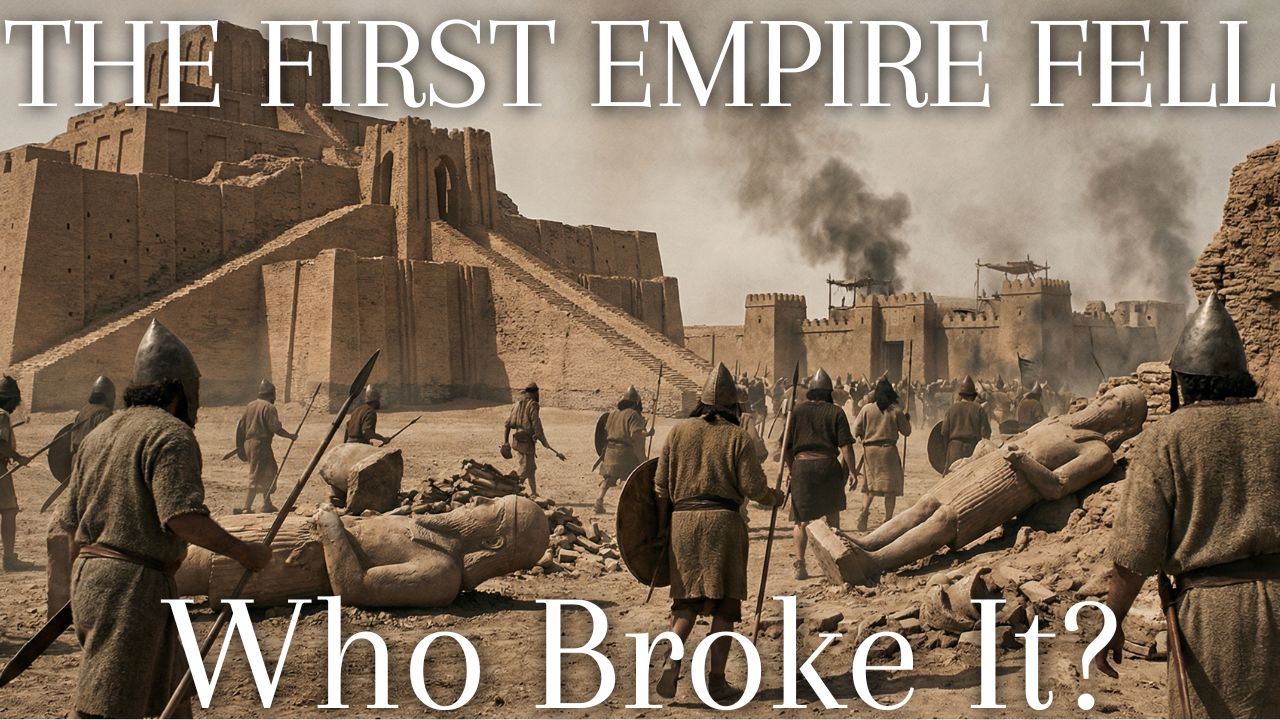
In the 22nd century BC, the lands of Sumer and Akkad, home to one of humanity’s oldest civilizations, were engulfed in unprecedented fear and chaos. A presence loathed and feared by the people of the highly advanced Mesopotamian civilization, who called them “poisonous snakes descending from the mountains” and “dogs without intelligence.” These were the “Gutians.”
They brought down the Akkadian Empire, the superpower of the time, and ruled all of Mesopotamia for about a century. However, their true image is astonishingly shrouded in mystery. Where did they come from? What language did they speak? And to which modern people are they connected?
In this article, we will explore the enigma of the Gutian Dynasty—the “Kings of the Mountains” erased from history.
Explore who the Gutians were, how Akkad fell, and what the surviving evidence can—and cannot—tell us.
The complete edition on Kindle: the full story of the Gutians and the fall of Akkad

Liberal Arts Bundle: read this book alongside a growing collection of English-language guides

- Who Were the Gutians? The Meaning of the Name and Its Terrifying Reputation
- The “Blonde Barbarian” Theory: The Origins and Identity of the Gutians
- The Fall of the Akkadian Empire: “The Curse of Akkad” and Historical Inevitability
- A Living Legacy: Are the Gutians the Ancestors of the Kurds?
- Conclusion: Beyond the Fog of History
- A Guide to Exploring Ancient Mesopotamia
Who Were the Gutians? The Meaning of the Name and Its Terrifying Reputation
The Definition of “Gutium”
In ancient Mesopotamian clay tablets, the words “Guti” or “Gutium” referred to the central Zagros Mountains, stretching from modern-day western Iran to northeastern Iraq. However, for urban dwellers, this word functioned as a symbol of “barbarity.” The Sumerians regarded their plains as the civilized world (kalam) and viewed the eastern mountains as a source of chaos.
The “Gutian Dynasty” was not merely a group of mountain bandits. They deliberately challenged the Akkadian Empire, crowned kings, and built their own governing institutions. The Sumerian King List proves they reigned over Mesopotamia as a political entity for a period of time, making them a force that could not be ignored.
A People Said to be “Not Even Human”
The fear harbored by the Sumerians toward the Gutians was extreme. Literary works such as “The Curse of Akkad” describe them using intense expressions, claiming they had “the face of a human but the habits of a dog” and “looked like monkeys.”
They were portrayed as beings lacking social norms—knowing no formal marriage rituals or language. While these were likely propaganda created by the defeated, they reflect the fundamental fear of the “incomprehensible other.” These warriors excelled in guerrilla tactics and surprise attacks, appearing out of nowhere like “demons” sent as divine punishment.
The “Blonde Barbarian” Theory: The Origins and Identity of the Gutians
The Truth Behind the “White Skin” Legend
A famous theory from the 19th and early 20th centuries suggests that the Gutians had blonde hair or white skin. This was based on the Akkadian word “namrum” (shining or bright), which some scholars interpreted as referring to physical characteristics distinct from southern Mesopotamians.
While modern Assyriology largely rejects the “Nordic warrior” image, the tradition that they had an “alien appearance” remains a fascinating subject of debate. Whether this stemmed from biological traits or cultural differences like ornaments and tattoos, the Gutians remain unique in the Mesopotamian landscape.
The Mysterious “Gutian Language”
The language they spoke is one of the greatest “blank spaces” on the linguistic map. Only a few king names, like Inkishush and Sarlagab, survive. Some linguists have proposed a “Tocharian affinity theory,” suggesting they were the earliest branch of Indo-Europeans in the Middle East. Others believe they spoke an “isolated language” unique to the Zagros Mountains, completely different from Sumerian or Akkadian.
The Fall of the Akkadian Empire: “The Curse of Akkad” and Historical Inevitability
Wrath of the Gods or Environmental Collapse?
According to the Sumerian tale “The Curse of Akkad,” the empire’s ruin was caused by the god Enlil’s wrath. However, historical data suggests a more practical cause: the “4.2 kiloyear climate event.” Around 2200 BC, a severe drought struck Mesopotamia. As the plains turned to desert, starving Gutian groups likely descended into the fertile regions for survival.
The Gutians did not just fight battles; they severed trade routes—the “blood vessels” of the empire. Logistics ground to a halt, prices skyrocketed, and famine struck the cities. This effective strategy of severing supply lines neutralized the mighty Akkadian army and led to a century of Gutian rule.
A Living Legacy: Are the Gutians the Ancestors of the Kurds?
In modern Middle Eastern politics, the Gutian name has seen an unexpected resurrection. Many discussions regarding the ethnic origins of the Kurdish people point to the Gutians as their ancestors. This theory is based on geographical coincidence, as the Gutian heartland in the Zagros Mountains perfectly overlaps with present-day Kurdistan.
While academic evidence directly linking the languages is scarce, the narrative of being descendants of “proud mountain people who once ruled civilization” serves as a spiritual pillar for the Kurdish identity today. The Gutians are not just fossils of the past; they live on in modern identity politics.
Conclusion: Beyond the Fog of History
The Gutians were the “system-resetters” of ancient history. They dismantled the first unified empire and paved the way for the Sumerian Renaissance. Yet, so much of their story remains untold.
- What were the names and deeds of the 21 kings recorded in the King List?
- What specific military tactics allowed them to defeat a superpower?
- How did the “War of Liberation” finally drive them out?
- What does archaeology tell us about their daily lives and religious views?
Continue with the complete edition
The full-length edition, The Gutians: The Mountain People Who Toppled the Akkadian Empire, continues the story with the full king list, tactical analysis, the war that drove the Gutians out, and the source archive behind the evidence. If the single textbook sentence never sat right with you, this is the century it left out.
Choose the complete book on Kindle, or explore it with other English-language guides in the Liberal Arts Bundle.
The complete edition on Kindle: the full story of the Gutians and the fall of Akkad
Liberal Arts Bundle: read this book alongside a growing collection of English-language guides
A Guide to Exploring Ancient Mesopotamia
Start with Sumer’s city-states
- Early Dynastic Mesopotamia: How Sumerian Civilization Built the First City-States — Discover the urban institutions, writing, and rival cities that preceded Akkad.
Follow the later kingdoms and empires
- When Was the Old Babylonian Period? Dates, Map, and Why Sources Disagree — Understand the competing chronologies and political landscape of Hammurabi’s era.
- What Was the Neo-Assyrian Empire? Meaning and Dates — See how a later Mesopotamian empire is defined and why modern labels need care.
- Understanding the Neo-Babylonian Empire in Ancient Mesopotamia — Distinguish Babylon’s final empire from its earlier kingdoms and trace its claims of restoration.

コメント